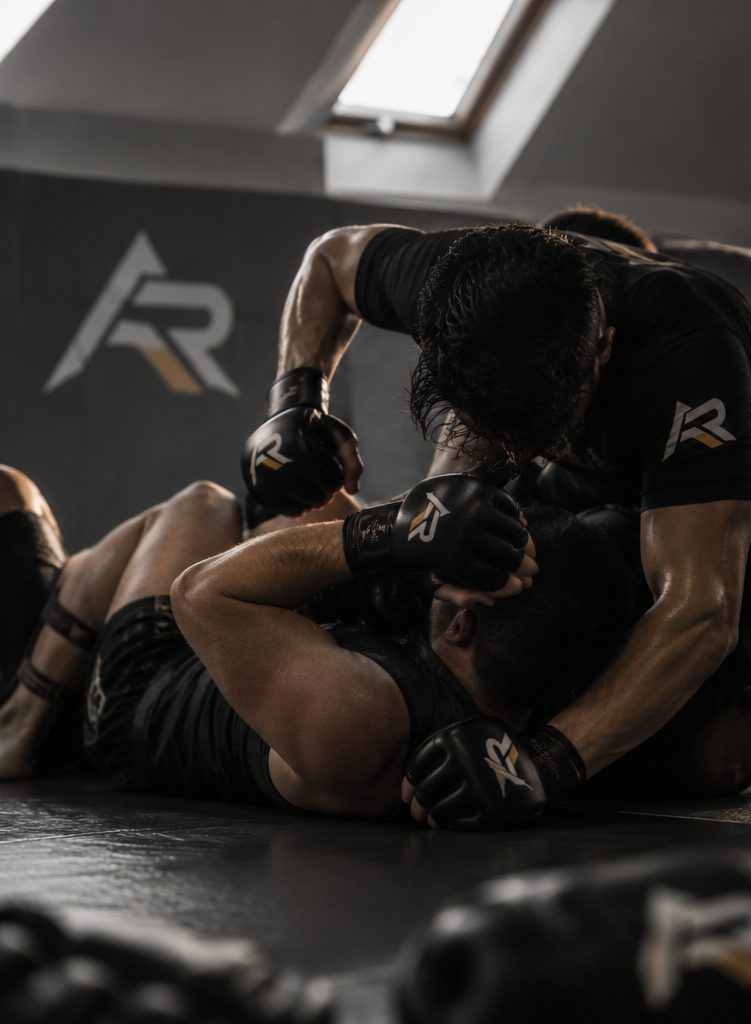
Control without fabric
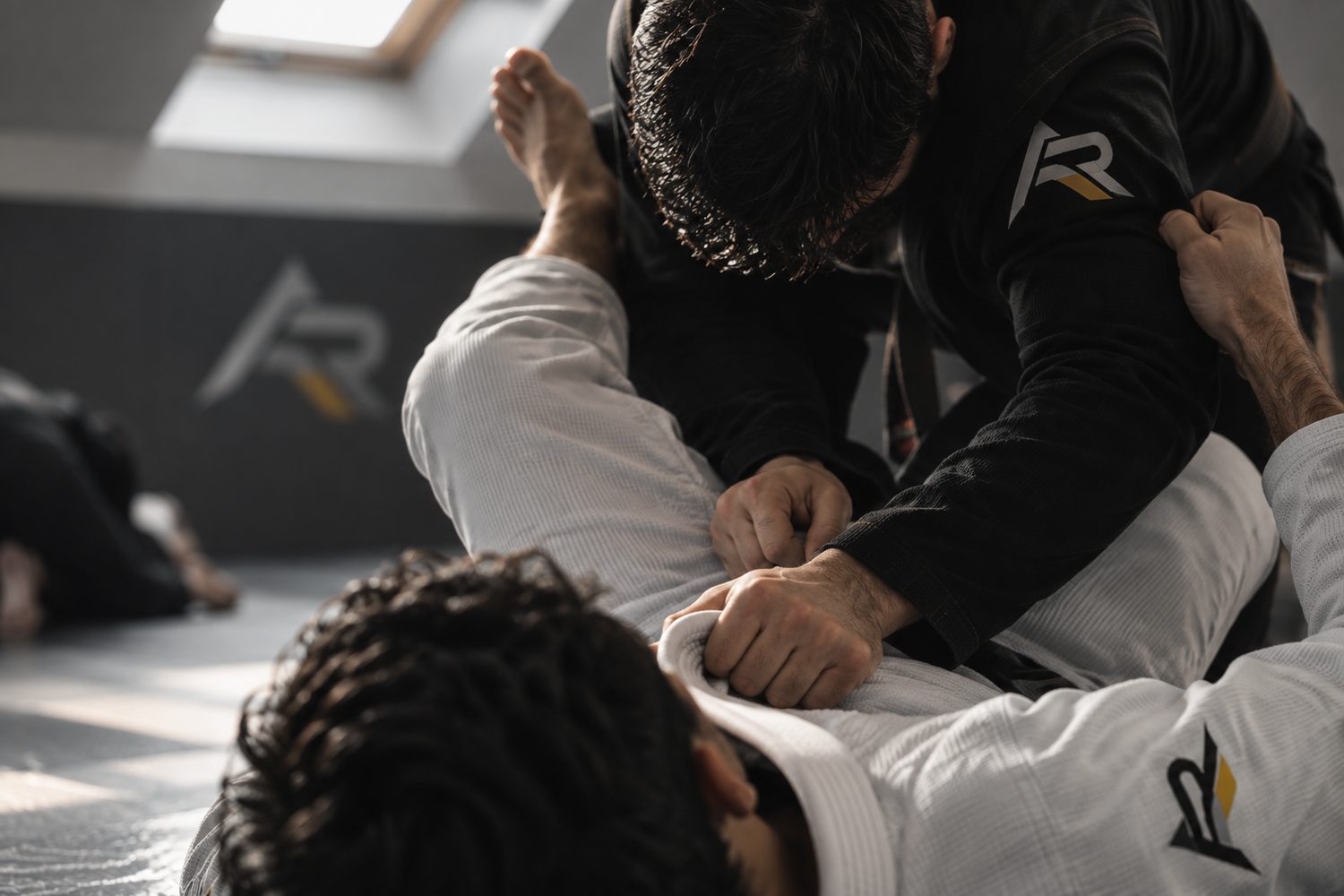
No collar, no sleeves — so you grip the body: hooks, underhooks, wrist control.
No-Gi · Wrestling without the gi
Grappling is ground fighting stripped of the gi. No collar or sleeve to grab: you control the body, the neck, the wrists. Everything moves faster, everything gets slippier, and leg attacks take centre stage.
Where it comes from
Modern grappling is a melting pot. It draws on catch-as-catch-can, born at the fairs of 19th-century Lancashire, on Olympic freestyle wrestling, on judo and, of course, on Brazilian jiu-jitsu.
It really took off in 1998 with the creation of the ADCC (Abu Dhabi Combat Club) by Sheikh Tahnoon bin Zayed, a practitioner himself. The tournament brought wrestlers, judoka and jiu-jitsu players together under a single ruleset, with no gi. It became the world benchmark for the sport.
Since then, no-gi has developed its own grammar: body-lock passing, systematised leg attacks, a higher pace. Many practitioners now switch between gi and no-gi, each one feeding the other.
The principles
No collar, no sleeves — so you grip the body: hooks, underhooks, wrist control.
Sweat and the lack of grips make escapes easier. You have to chain your moves faster.
Heel hooks, straight ankle locks, 50/50 entries: the lower body becomes a target in its own right.
It's the form of grappling you can use most directly with gloves on.
At Arcano
Grappling classes run on Tuesdays and Thursdays, from the 10:30 session right through to the evening, with a Fundamentals class at noon and a Grappling Kids session at 17:45. It's the natural partner to BJJ — and a must for anyone who wants to get into MMA.
Schedule
← Swipe →
Frequently asked questions
No, you can start straight with no-gi. And if you do both, each one makes the other stronger.
Fight shorts with no pockets or zips, plus a rashguard. The academy will advise you for your first class.
The belt system comes from BJJ. In pure no-gi, progress is measured mainly through competition and technical level.
Other disciplines