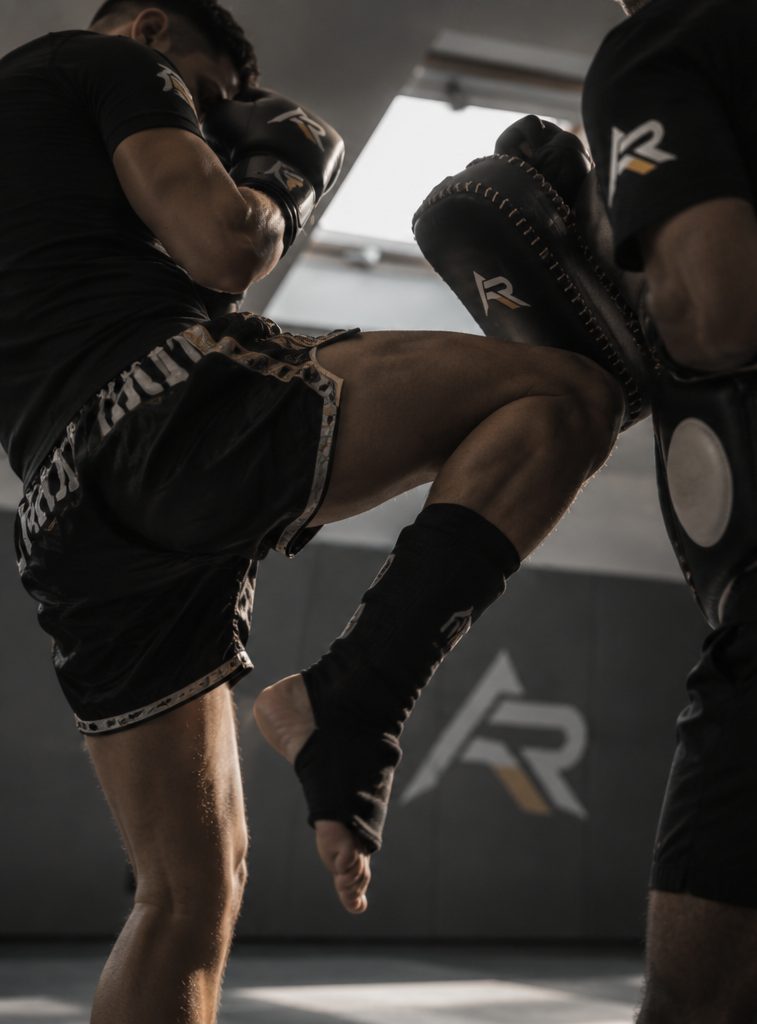
Eight weapons
Fists, shins, elbows and knees. Every range has its tool.
Striking · The art of eight limbs
Fists, feet, elbows, knees: eight points of contact instead of two. Muay Thai is the most complete form of stand-up boxing — and one of the oldest still practised in a form close to its origins.
Where it comes from
Muay Thai descends from muay boran, the unarmed combat techniques of the armies of the Kingdom of Siam. What was once practised on the battlefield gradually became a display art, then a competitive sport.
In the 20th century, the sport was codified: boxing gloves, rounds, weight classes. Two Bangkok stadiums became its temples — Rajadamnern, opened in 1945, and Lumpinee in 1956. Fighting there is still the ultimate honour.
The ritual survived the move into sport. Before every fight, the wai kru ram muay — a dance paying tribute to one's teachers — is performed to the sound of the sarama. Muay Thai has never cut ties with what it once was.
The principles
Fists, shins, elbows and knees. Every range has its tool.
You strike with the shinbone, like a bat. Hence the importance of gradual conditioning.
Stand-up grappling, neck control and knees. It's Muay Thai's technical signature.
The front kick — a jab with the leg and a distance-management tool in one.
At Arcano
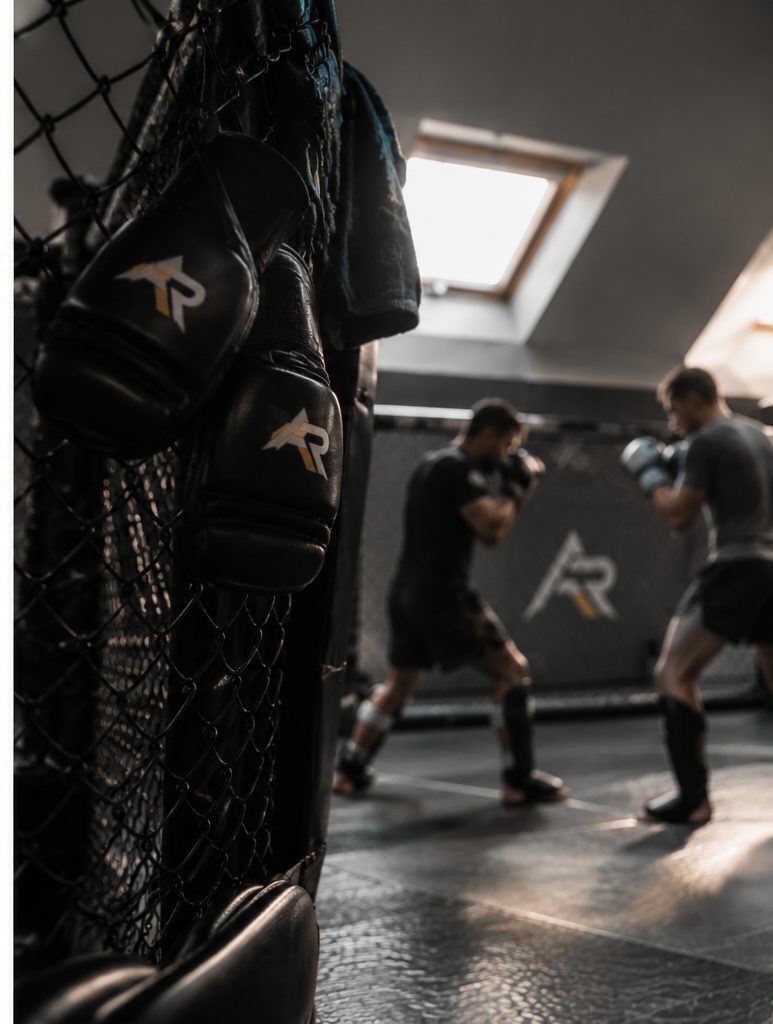
Muay Thai is trained on Mondays and Fridays at 20:00, and on Wednesdays at 20:45. Teens aged 15 to 17 join the classes through a Teens plan, twice a week. Technical work, pads, bag and clinch — power, precision and endurance, the Thai way.
Schedule
← Swipe →
Frequently asked questions
At first, yes, a little. Conditioning is gradual: you never start by kicking hard. Shin guards are worn in training.
No. Flexibility comes with practice, and plenty of techniques — teeps, knees, hands — don't need it.
Muay Thai allows elbows and the clinch, which most kickboxing rulesets ban. It's more complete at close quarters.
Other disciplines