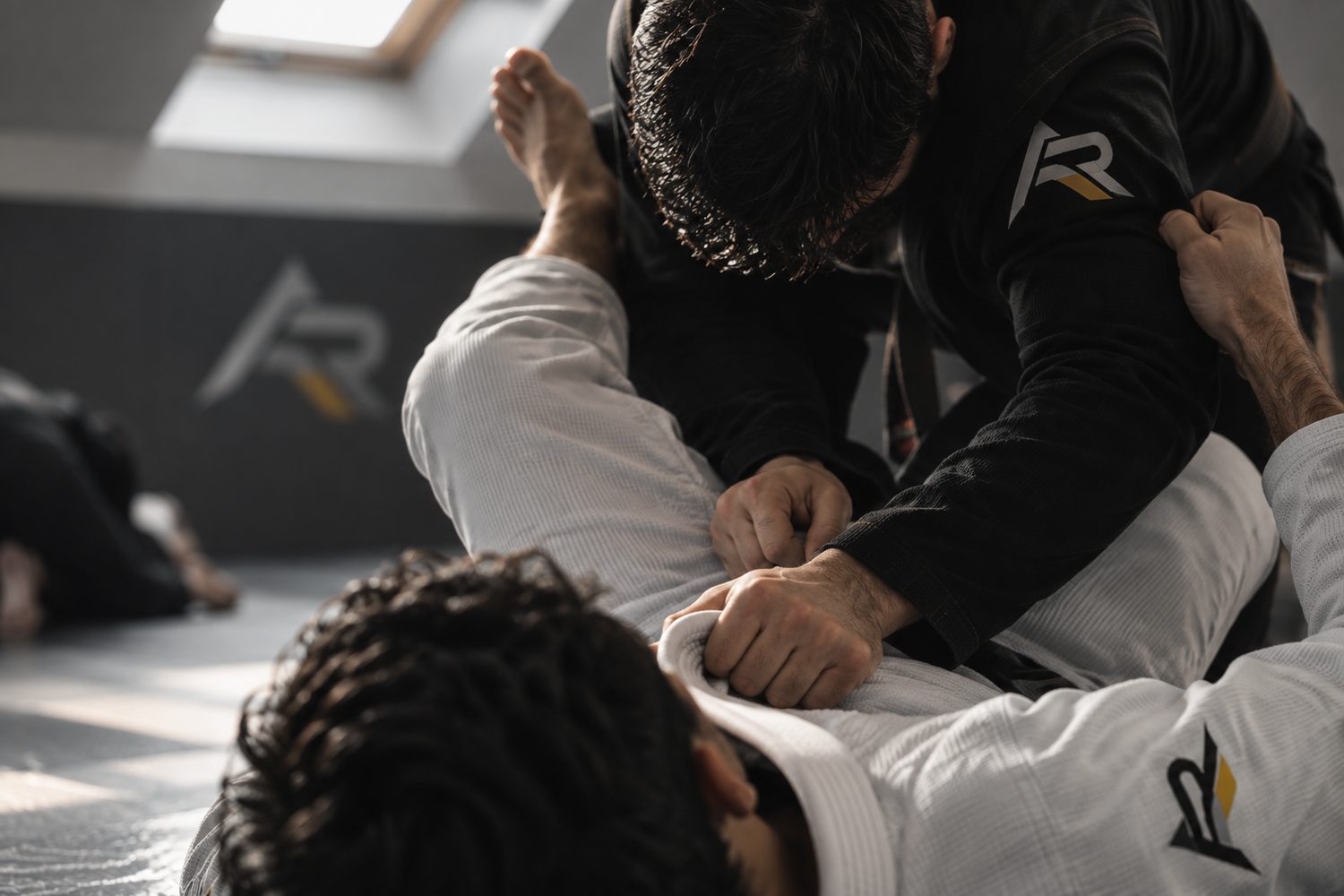
Position before submission
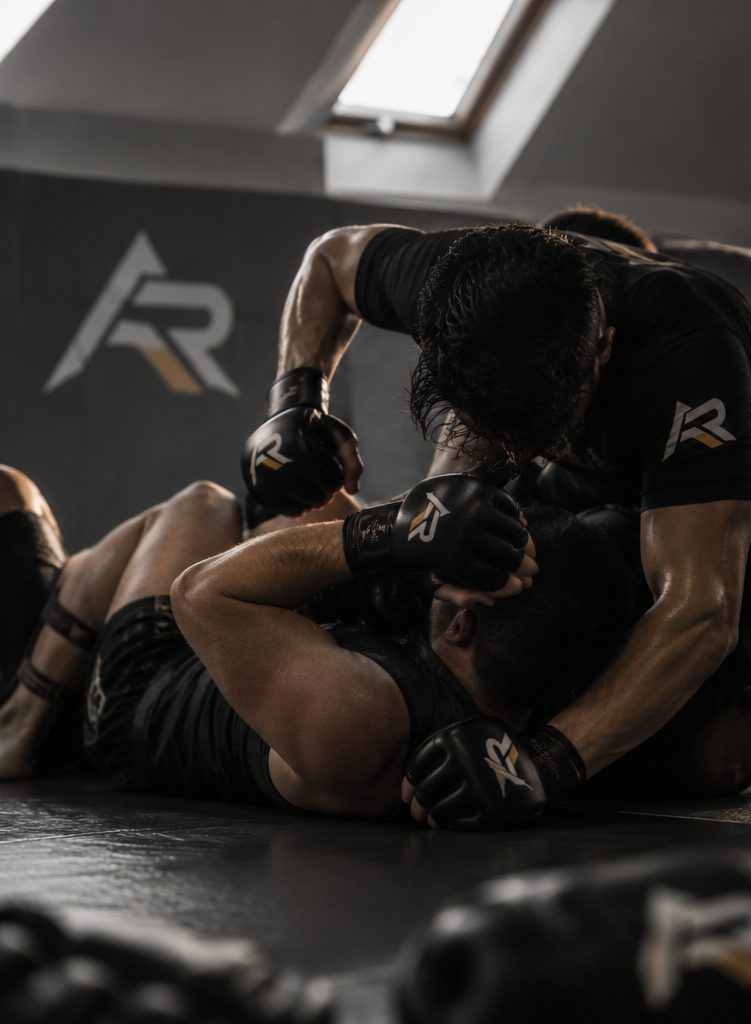
No chasing the finish until control is secured. Stabilise first, attack second.
Flagship discipline · The art of leverage
Brazilian jiu-jitsu is the art of fighting on the ground. It starts from a simple idea: a smaller, weaker person can control — then submit — a bigger one, as long as they understand leverage, angles and body weight.
Where it comes from
The story begins in Japan, where jiu-jitsu was the close-combat method of the warrior class — until Jigoro Kano drew judo from it in 1882. One of his students, Mitsuyo Maeda, nicknamed Conde Koma, set off to spread the art around the world and settled in Brazil in 1914.
In Belém, Maeda taught Carlos Gracie. The Gracie family seized on the method and transformed it. Hélio Gracie, slighter than his brothers, rewrote the techniques so they would work without strength, favouring position, patience and energy efficiency. That adaptation is what the world now calls Brazilian Jiu-Jitsu.
The discipline stepped out of the shadows on 12 November 1993, when Royce Gracie — the lightest of the finalists — won the first UFC tournament by submitting far heavier opponents. The message rang out everywhere: on the ground, technique beats strength.
The principles
No chasing the finish until control is secured. Stabilise first, attack second.
Hips, frames, angles. A properly isolated arm gives way, whatever the size of its owner.
“Rolling” is done against real resistance from the very first weeks. That's what sets BJJ apart from purely choreographed arts.
Tapping out isn't losing: it's the mechanism that makes hard training possible without injury.
At Arcano
At Arcano, BJJ is trained in the gi, six days a week. Fundamentals classes go back over the basics every cycle — ideal if you're walking in with zero experience. All Levels classes mix every grade, and the Wednesday evening Advanced class is reserved for blue belts and above.
Schedule
← Swipe →
Frequently asked questions
No. Fitness comes with training. Fundamentals classes are built for bodies that are just getting started, and you set your own intensity when sparring.
No. Come in shorts and a T-shirt — the academy will lend you a gi for your trial class.
Two to three years of regular training on average. BJJ is famous for its slow progression — and that's by design.
Sparring is done with controlled resistance and everything is settled with a tap. It's one of the combat sports where you take the fewest blows to the head.